 Image 1 of 1
Framed Antique Obi Silk Calligraphy – Set of Two
These remarkable framed silk panels preserve a rare cultural artifact from Kyoto, Japan.
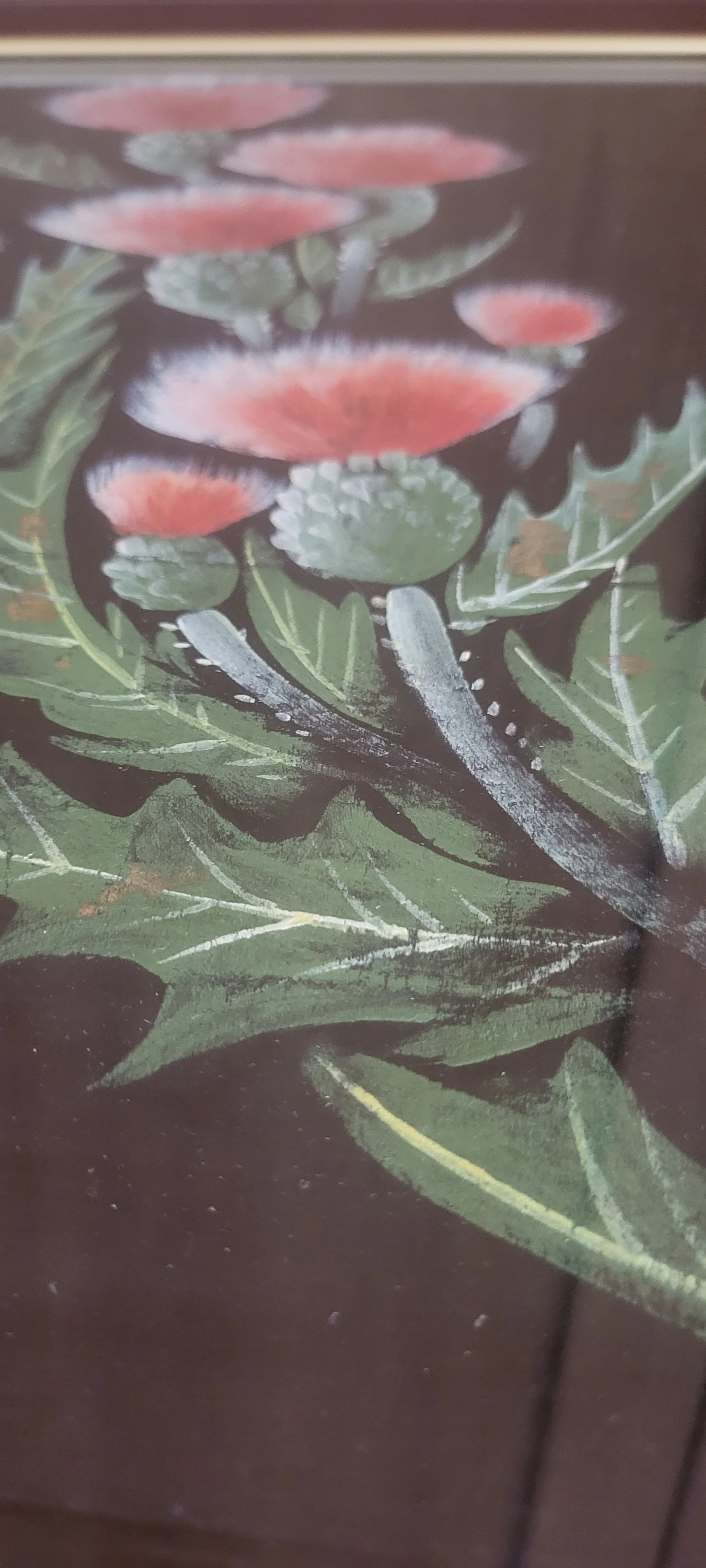
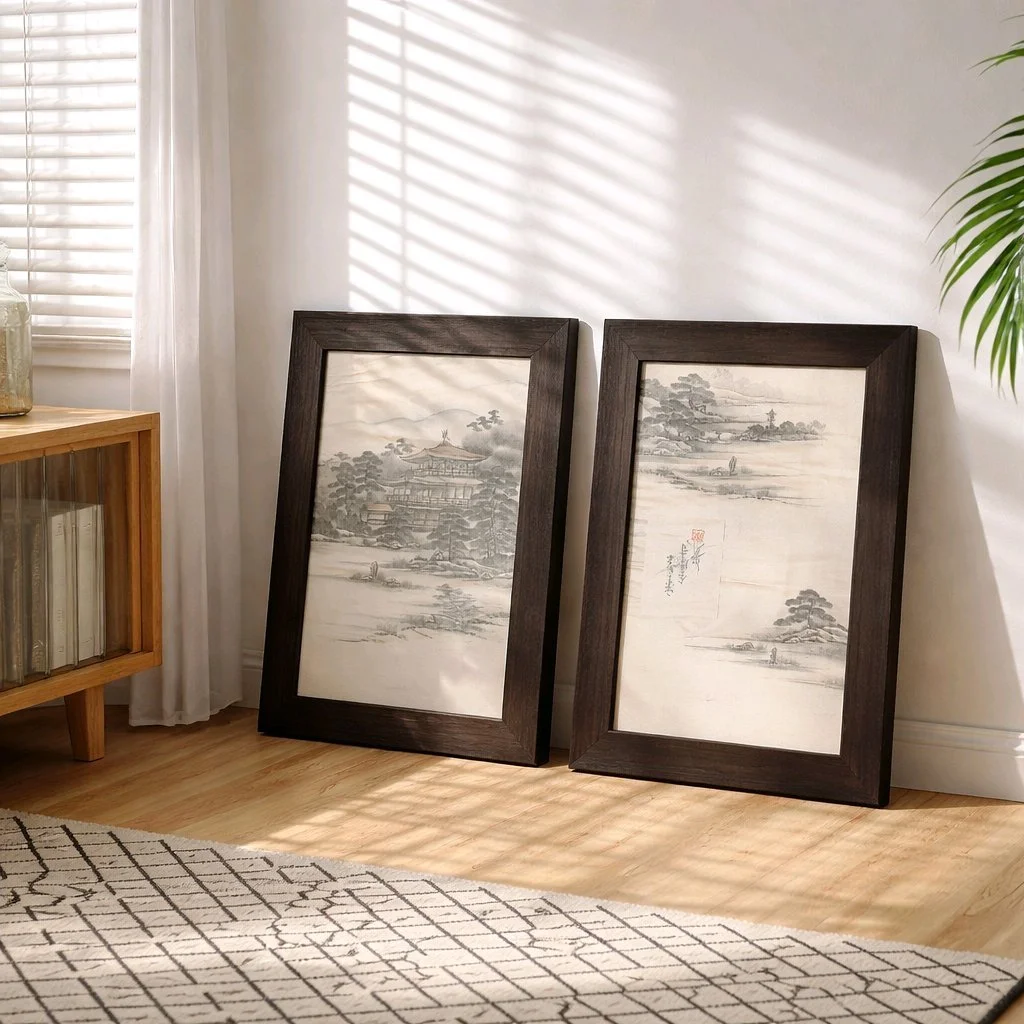
The textile originates from an antique obi that served as a commemorative souvenir from Kinkaku-ji, the famed Golden Pavilion temple. Delicately rendered ink landscapes and calligraphy capture scenes associated with the temple grounds, while the inscriptions commemorate the spiritual legacy of the site.
The word Omoide, meaning memories, traditionally appears on keepsakes given to visitors after a pilgrimage or meaningful visit to a temple. The calligraphy also references Dai Juugosei — the 15th generation, believed to refer to the 15th abbot of Kinkaku-ji.
Based on the handwriting style, the inscription is attributed to Arima Raitei, the respected Zen monk who served as the 15th Abbot of Kinkaku-ji. The red seal visible on the textile appears to be his official stamp.
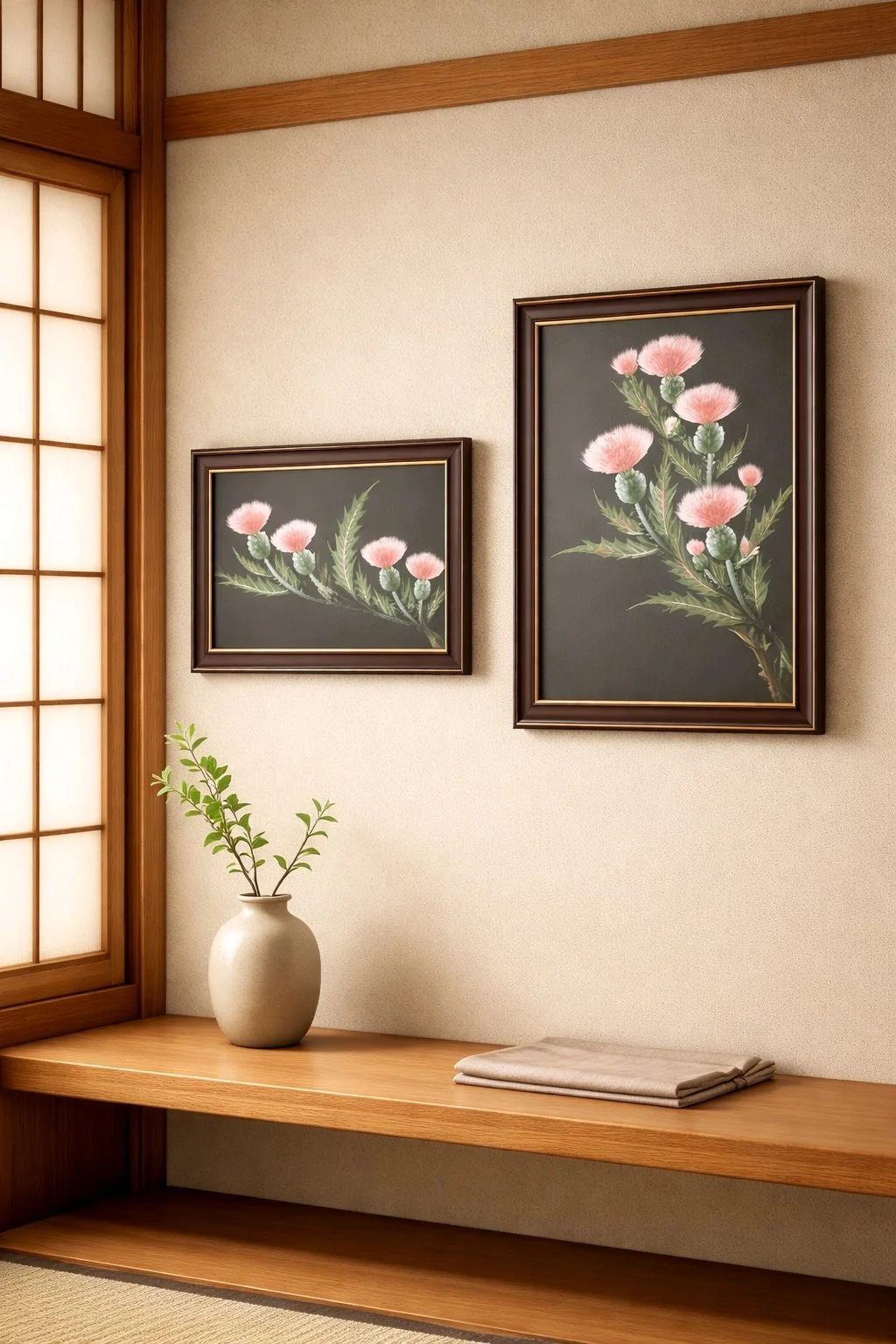
Carefully preserved and mounted in solid wood frames, these two panels transform the historic textile into an elegant wall display that celebrates Japanese spiritual heritage, calligraphic art, and traditional silk craftsmanship.
Displayed together, the pair forms a quiet narrative — a reflection on memory, place, and the enduring beauty of Kyoto’s most iconic temple.
Each framed piece is completely one of a kind.
What is the story behind this obi?
This obi was created as a souvenir from Kinkaku-ji (The Golden Pavilion) in Kyoto, Japan.
Omoide means memories and is often added to calligraphy or charms given to visitors as a keepsake of their visit or pilgrimage to a temple.
Kinkaku-ji means Temple of the Golden Pavilion and refers to the famous Zen Buddhist temple known formally as Rokuon-ji.
Dai Juugosei translates to 15th Generation, likely referencing the 15th Abbot of Kinkaku-ji.
Based on the calligraphy style, the inscription appears to be written by Arima Raitei, the respected Zen monk who served as the 15th Abbot. The red seal visible on the panel appears to be his official seal.
Historical interpretation gathered using AI-assisted translation and research.
Antique Japanese obi silk
Calligraphy and landscape illustration
Referencing Kinkaku-ji (Golden Pavilion), Kyoto
Attributed calligraphy from Arima Raitei
Solid wood frames
Frame size: 16 × 21 inches each
Sold as a pair
Ready to hang
One-of-a-kind cultural textile artwork
Framed Antique Obi Silk Calligraphy – Set of Two
These remarkable framed silk panels preserve a rare cultural artifact from Kyoto, Japan.
The textile originates from an antique obi that served as a commemorative souvenir from Kinkaku-ji, the famed Golden Pavilion temple. Delicately rendered ink landscapes and calligraphy capture scenes associated with the temple grounds, while the inscriptions commemorate the spiritual legacy of the site.
The word Omoide, meaning memories, traditionally appears on keepsakes given to visitors after a pilgrimage or meaningful visit to a temple. The calligraphy also references Dai Juugosei — the 15th generation, believed to refer to the 15th abbot of Kinkaku-ji.
Based on the handwriting style, the inscription is attributed to Arima Raitei, the respected Zen monk who served as the 15th Abbot of Kinkaku-ji. The red seal visible on the textile appears to be his official stamp.
Carefully preserved and mounted in solid wood frames, these two panels transform the historic textile into an elegant wall display that celebrates Japanese spiritual heritage, calligraphic art, and traditional silk craftsmanship.
Displayed together, the pair forms a quiet narrative — a reflection on memory, place, and the enduring beauty of Kyoto’s most iconic temple.
Each framed piece is completely one of a kind.
What is the story behind this obi?
This obi was created as a souvenir from Kinkaku-ji (The Golden Pavilion) in Kyoto, Japan.
Omoide means memories and is often added to calligraphy or charms given to visitors as a keepsake of their visit or pilgrimage to a temple.
Kinkaku-ji means Temple of the Golden Pavilion and refers to the famous Zen Buddhist temple known formally as Rokuon-ji.
Dai Juugosei translates to 15th Generation, likely referencing the 15th Abbot of Kinkaku-ji.
Based on the calligraphy style, the inscription appears to be written by Arima Raitei, the respected Zen monk who served as the 15th Abbot. The red seal visible on the panel appears to be his official seal.
Historical interpretation gathered using AI-assisted translation and research.
Antique Japanese obi silk
Calligraphy and landscape illustration
Referencing Kinkaku-ji (Golden Pavilion), Kyoto
Attributed calligraphy from Arima Raitei
Solid wood frames
Frame size: 16 × 21 inches each
Sold as a pair
Ready to hang
One-of-a-kind cultural textile artwork