
What Is an Obi? A Guide to Japanese Kimono Sashes
What is an Obi?
An obi is the wide sash traditionally worn with a Japanese kimono. Obi are often made from richly woven silk and can feature elaborate patterns, embroidery, or hand-painted designs. Historically, the obi was both a functional garment and a symbol of craftsmanship and status.
History of the Obi
The obi, the wide sash worn with a kimono, began as a simple cord used to secure garments. During the Edo period (1603–1868), as kimono sleeves grew longer and clothing styles became more elaborate, the obi gradually widened to maintain balance in the silhouette.
By the late 18th century, women’s obi had become much wider and were typically tied in decorative knots at the back rather than the front. These larger sashes became an important part of kimono fashion and a canvas for intricate weaving, embroidery, and hand-painted silk designs.
Today, antique obi remain treasured examples of traditional Japanese textile artistry and craftsmanship.
Source: Adapted from “Obi (sash)” article, Wikipedia.
Types of Obi
Fukuro obi
The word “fukuro” means bag or pouch, referring to the way this type of obi is constructed with two layers of fabric sewn together. Fukuro obi are considered a formal style of obi and are traditionally worn with more elegant kimono.
These sashes are often richly decorated with gold or silver threads and detailed embroidery, creating a luxurious appearance. The decorative design is typically woven along one side of the obi, allowing the most elaborate portion to be displayed when tied.
https://project-japan.jp/the-types-of-obi/
Nagoya Obi
he Nagoya obi is generally considered a more casual style of obi compared to the formal fukuro obi. Its construction is simpler and easier to tie, making it a popular choice for everyday kimono wear.
Nagoya obi can be created using either piece-dyed fabric or yarn-dyed weaving techniques, and they appear in a wide variety of designs and styles.
The name comes from the city of Nagoya, where this style of obi was first developed in the late Taishō period (1912–1926). Today, Nagoya obi remain one of the most versatile and widely worn obi styles.
Hanhaba Obi
The term “hanhaba” literally means half width, referring to the obi’s narrower size. A hanhaba obi is typically about 15 cm (around 6 inches) wide, roughly half the width of a standard obi, which is usually about 30 cm (12 inches).
Because of its lighter and simpler design, the hanhaba obi is most often worn with casual kimono, such as komon, or with yukata during summer festivals and informal occasions.
Why Vintage Obi Textiles Are Special
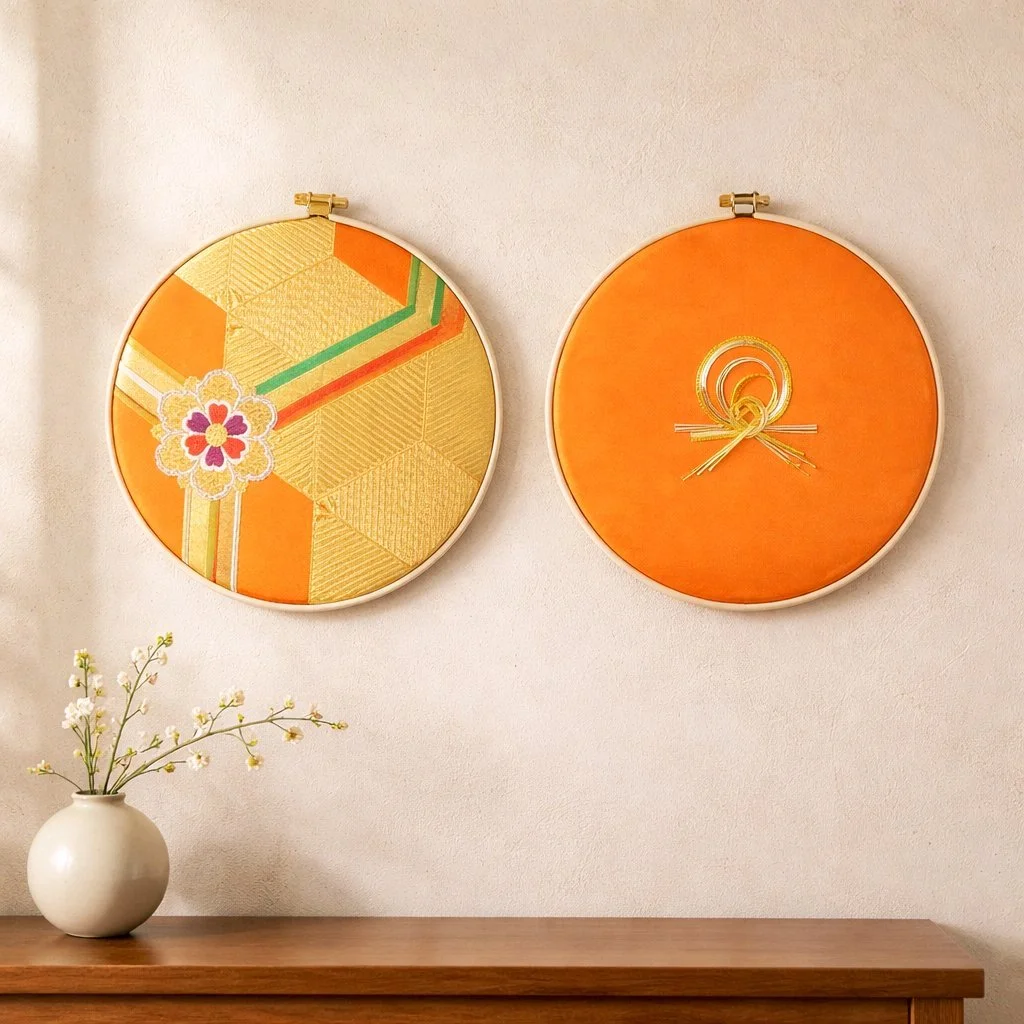
Many antique obi were woven from luxurious silk and created using traditional textile techniques. Today, these historic textiles can be preserved and appreciated in new ways through restoration and artistic reuse.
How Silk Revival Atelier Uses Obi
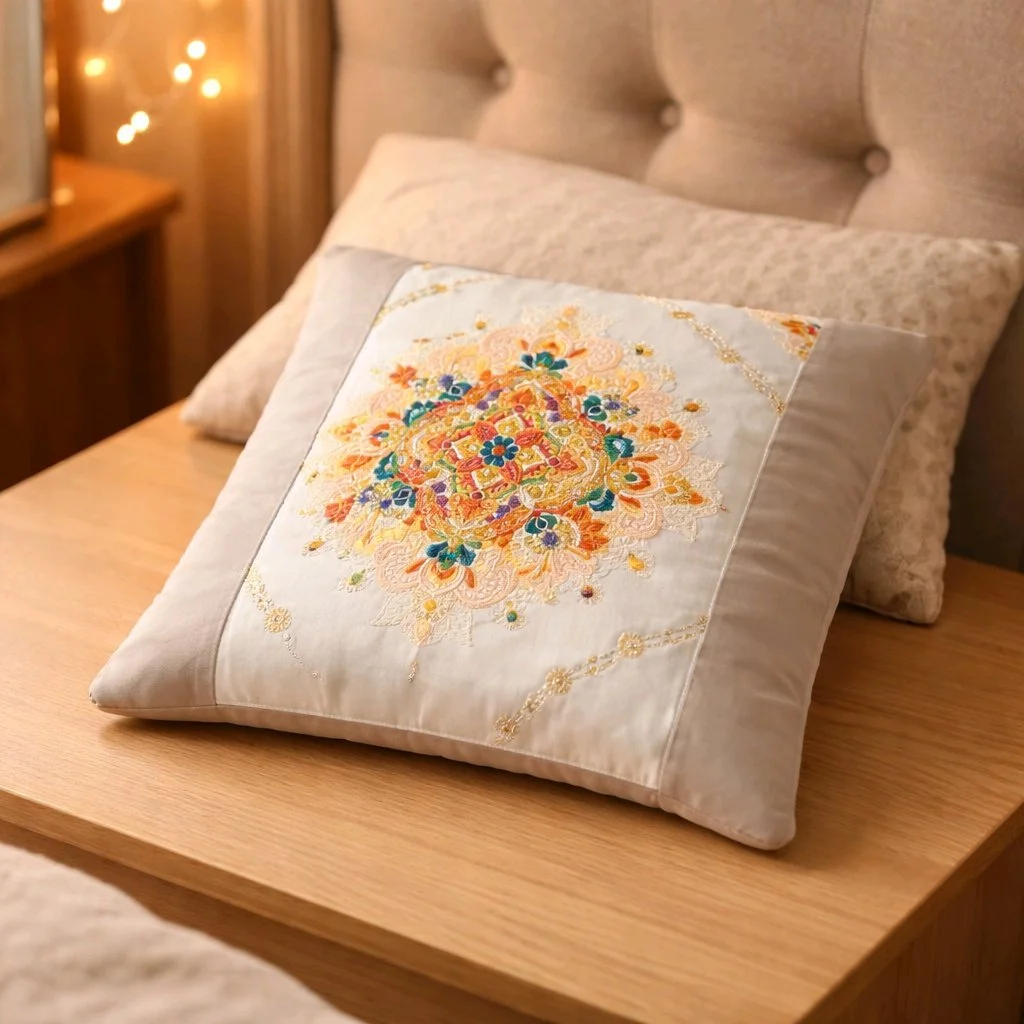
At Silk Revival Atelier, vintage obi are carefully restored and transformed into one-of-a-kind pieces such as handbags, pillows, and textile wall art. Each creation allows the beauty of the historic fabric to continue its story in a modern setting.
Obi Creations
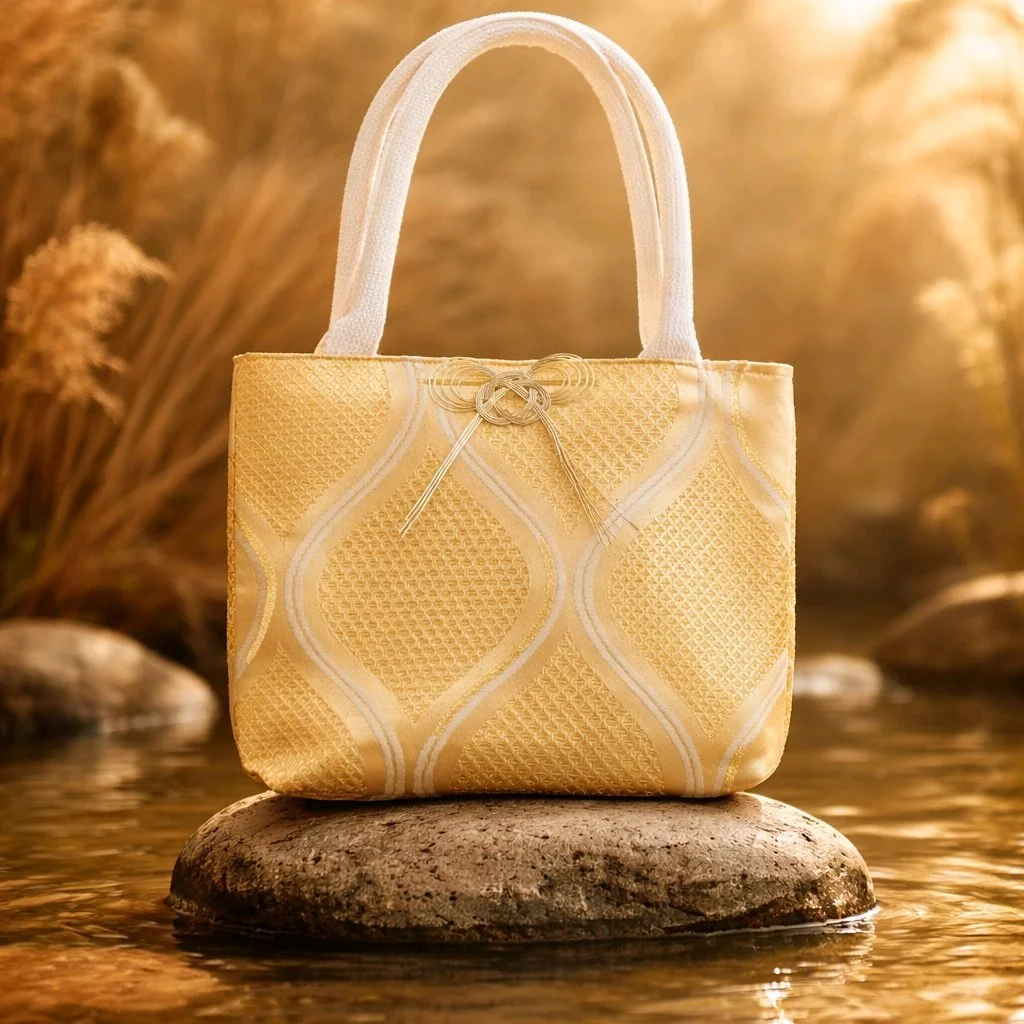
The Golden Obi Revival Handbag celebrates the beauty of traditional Japanese textiles through thoughtful craftsmanship.
Created from a vintage obi sash once worn with a kimono, the richly woven gold fabric features intricate patterns that shimmer subtly in the light. Paired with durable woven canvas handles, the design balances elegance with everyday functionality.
Each bag is handcrafted to preserve the history of the textile while giving it a new life as a modern accessory. Because every obi carries unique patterns and placement, no two handbags will ever be exactly alike.
A timeless piece that blends heritage, artistry, and sustainability.
No Restocks, one-of-a-kind
Product Details
• Vintage Japanese obi textile
• One-of-a-kind pattern placement
• Woven canvas handles
• Snap button closure
• Structured design
Dimensions:
• 11" wide
• 9" deep
• 7" handle drop
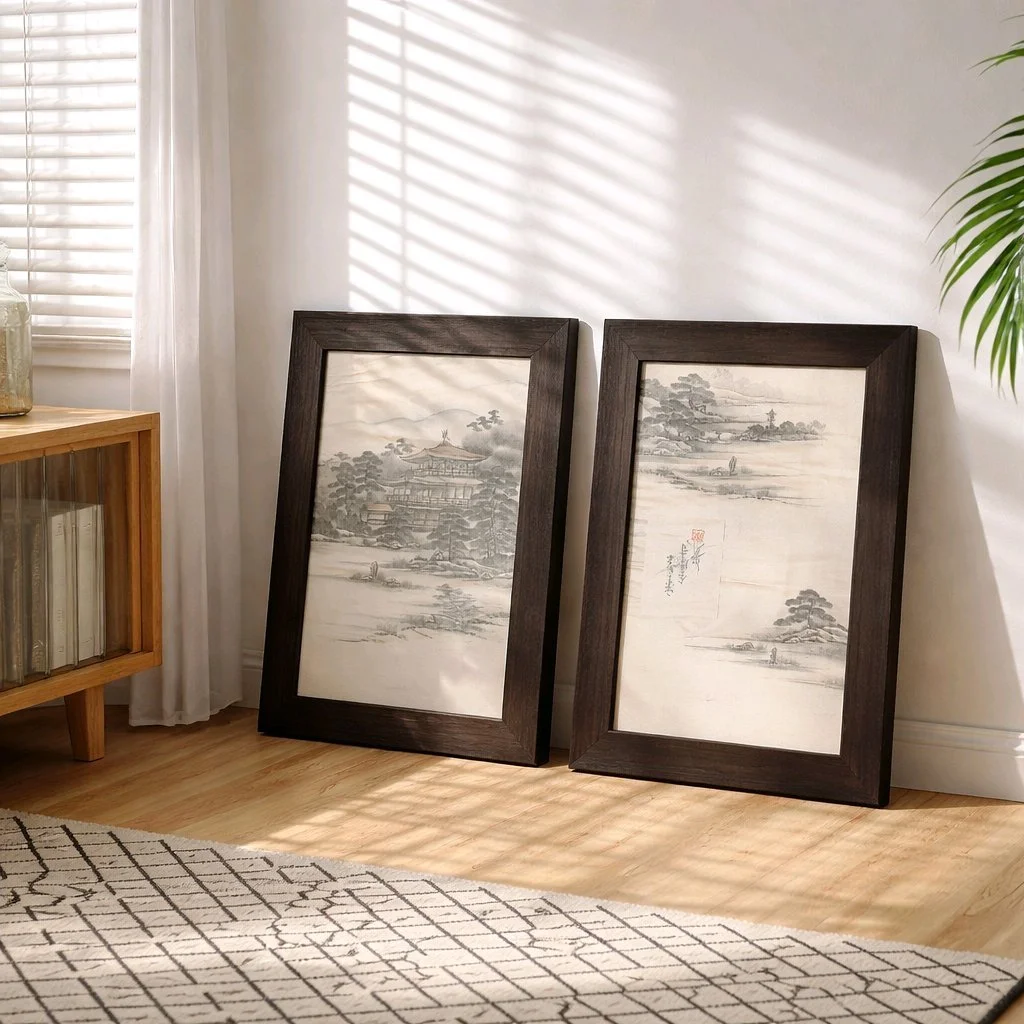
Framed Antique Obi Silk Calligraphy – Set of Two
These remarkable framed silk panels preserve a rare cultural artifact from Kyoto, Japan.
The textile originates from an antique obi that served as a commemorative souvenir from Kinkaku-ji, the famed Golden Pavilion temple. Delicately rendered ink landscapes and calligraphy capture scenes associated with the temple grounds, while the inscriptions commemorate the spiritual legacy of the site.
The word Omoide, meaning memories, traditionally appears on keepsakes given to visitors after a pilgrimage or meaningful visit to a temple. The calligraphy also references Dai Juugosei — the 15th generation, believed to refer to the 15th abbot of Kinkaku-ji.
Based on the handwriting style, the inscription is attributed to Arima Raitei, the respected Zen monk who served as the 15th Abbot of Kinkaku-ji. The red seal visible on the textile appears to be his official stamp.
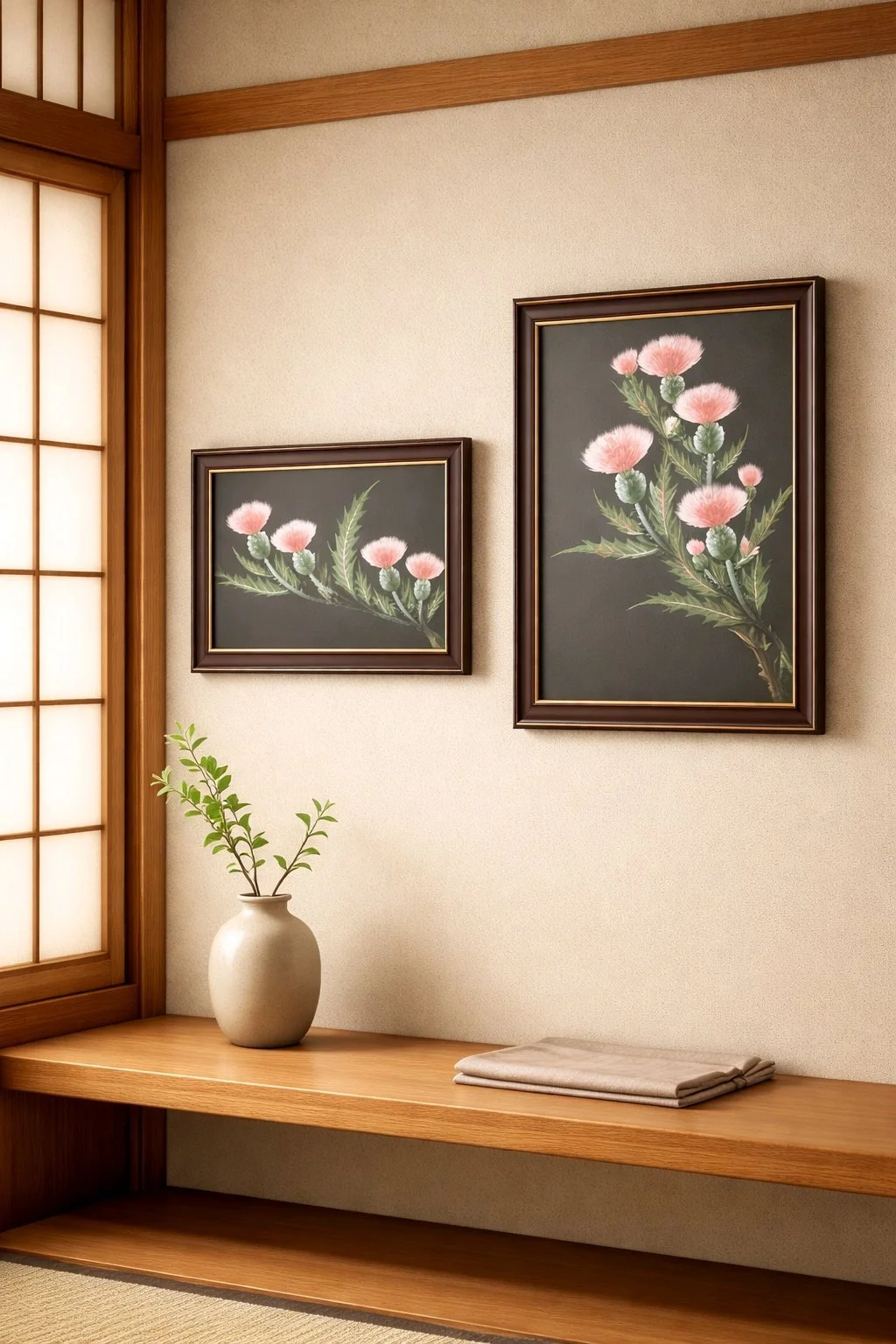
Carefully preserved and mounted in solid wood frames, these two panels transform the historic textile into an elegant wall display that celebrates Japanese spiritual heritage, calligraphic art, and traditional silk craftsmanship.
Displayed together, the pair forms a quiet narrative — a reflection on memory, place, and the enduring beauty of Kyoto’s most iconic temple.
Each framed piece is completely one of a kind.
Story Behind the Textile
What is the story behind this obi?
This obi was created as a souvenir from Kinkaku-ji (The Golden Pavilion) in Kyoto, Japan.
Omoide means memories and is often added to calligraphy or charms given to visitors as a keepsake of their visit or pilgrimage to a temple.
Kinkaku-ji means Temple of the Golden Pavilion and refers to the famous Zen Buddhist temple known formally as Rokuon-ji.
Dai Juugosei translates to 15th Generation, likely referencing the 15th Abbot of Kinkaku-ji.
Based on the calligraphy style, the inscription appears to be written by Arima Raitei, the respected Zen monk who served as the 15th Abbot. The red seal visible on the panel appears to be his official seal.
Historical interpretation gathered using AI-assisted translation and research.
Details
Antique Japanese obi silk
Calligraphy and landscape illustration
Referencing Kinkaku-ji (Golden Pavilion), Kyoto
Attributed calligraphy from Arima Raitei
Solid wood frames
Frame size: 16 × 21 inches each
Sold as a pair
Ready to hang
One-of-a-kind cultural textile artwork
Vintage Japanese Textile | Bamboo Hoop Display
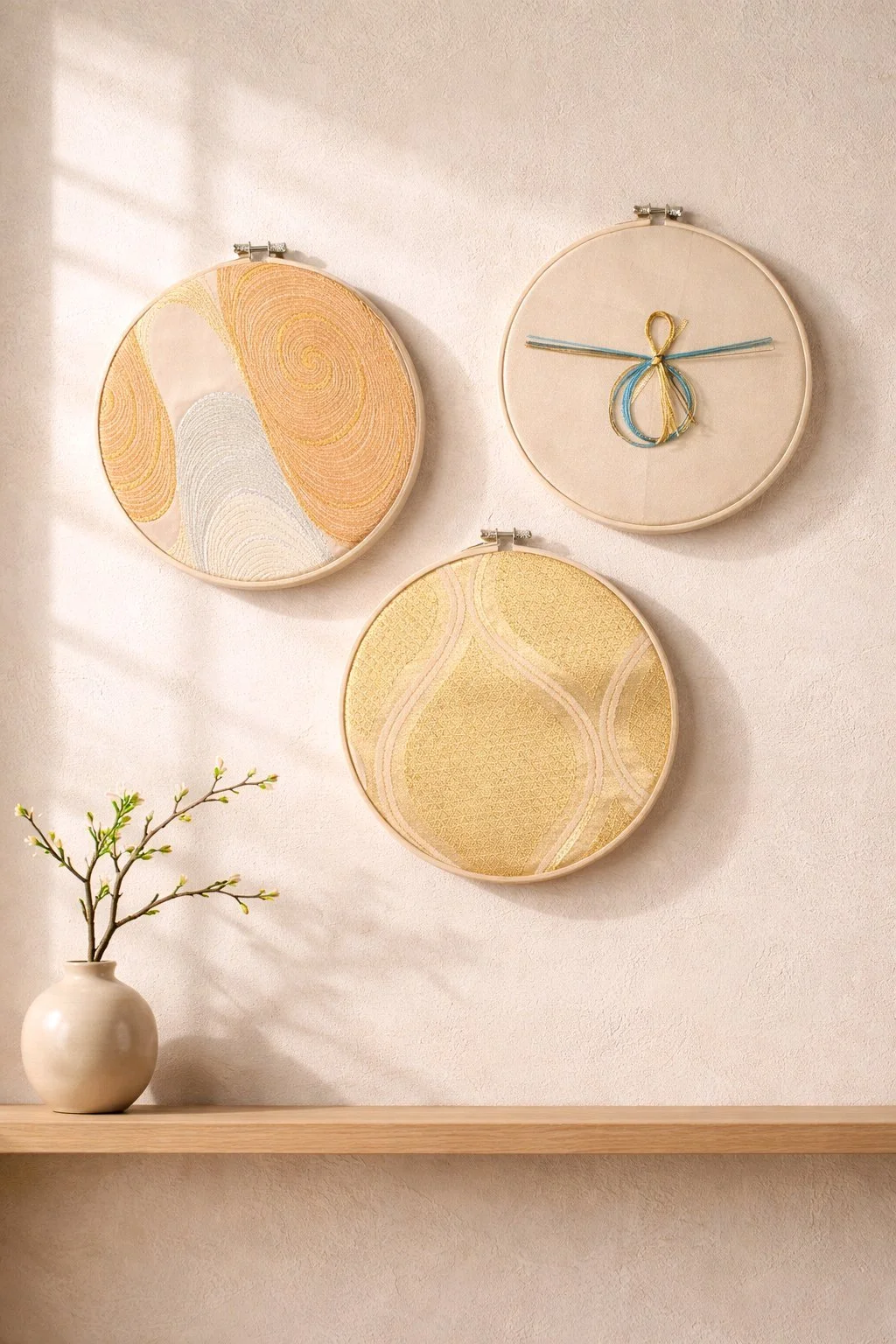
Transform historic Japanese textiles into modern wall art with this curated set of three silk obi wall hangings.
Each piece features authentic vintage obi silk carefully mounted in a natural bamboo embroidery hoop, allowing the intricate patterns and textures of the textile to become the focal point. The soft golds and warm neutrals create a calming, sculptural composition that brings quiet elegance to any interior.
Designed to be displayed together, the three hoops form a balanced wall arrangement that celebrates the artistry of traditional Japanese weaving while embracing a minimalist, contemporary presentation.
Because each hanging is made from authentic vintage obi fabric, every set is unique. The subtle variations in silk and pattern are part of the textile’s history and character.
Ideal for entryways, bedrooms, and curated living spaces, these pieces offer a simple yet striking way to incorporate heritage textiles into modern décor.
Details
Authentic vintage Japanese obi silk
Set of three wall hangings
Natural bamboo embroidery hoops
Approximately 20 cm (8 in) diameter each
Ready to hang
Handmade in Japan
One-of-a-kind textile composition